Thursday, 30 October 2008

"THE SIMPSONS"


"Which Simpson character are you?"

Prior to todays lesson we were asked to do a simple test to establish which Simpsons character we are most similar to personality wise.... and to my HORROR it turned out that myself and Homer had more in common than i ever would have imagined!! Upon reading the description of Homers personality i found his strengths are: He is generous and will go out of his way to help a colleague. Lives for the moment and knows how to make the most of each moment. His weaknesses being: Can take conflict personally and resists relationships that require him to function on a high intuative or thinking level!! I guess if i really think about it and if im really honest then most of these attributes do apply to me, however, Homer is known as "The Entertainer" (ESFP) ... not a word i would use to describe myself!!!

Following this we were then asked to take the Myer Briggs personality test. My result differed slightly and a came out as "The Inspirer/The Visionary" (ENFP) and this description was very accurate of myself...infact it was scarily true of my personality to the point where i was a little freaked out by reading it, non the less it was extremely interesting reading. Take the test for yourself by following this link: http://www.mypersonality.info/personality-types/


Friday, 24 October 2008

Segmentation...

The aim of the marketeer is to split the consumer into groups. But realisticly how easy is this when you think of all the different possible combinatins of people, or even still if you think that every single person in the world is an individual and there are no two exactly the same. The factors influencing behaviour from my previous blog suggests that everyone is unique.


How are 60 million people divided up into groups? Marketeers are always looking for ways to group people. They strive to find out as much information as possible about the consumer to allow them to target their market effectively.

For example Tesco Loyalty card-there are roughly 12/13 million people who own one of these. Through computer analysis of this data the company is able to achieve a detailed profile of most of their customers. Whether their married, single, how many children they have, where they live, their spending habits, their lifestyles etc. This is all done through market research, through things such as questionnaires. By simply giving your postcode to someone they can instantly find out what your typical income is, what kind of area you live in, what level of education you are likely to have. Find out for yourself, a detailed profile of your expected lifestyle, by entering your postcode into the following link:
http://www.upmystreet.com/

This research is carried out by what we call "Profilers" and it is believed that the technology used within these databases to find out exactly what a customer wants, is the same technology used for the database used to trap and understand serial killers, used by the CIA and FBI!!
The identifiable profilers become the basis for segmentation:

  • Age
  • Gender
  • Social Class
  • Personality
  • Hair colour and type.
Did you know that in the olden days carbolic soap was used to clean just about everything, from floors to your hair! Nowadays though you will notice a significat change as there are so many types of shampoos for every different type of hair:
  • Greasy
  • Dry
  • Blonde
  • Red
  • Brunette
  • Dyed
  • Thin
  • Curly
  • Damaged
  • Frequently Washed
  • Nits
  • Dandruff
  • Flaky/Itchy scalp
  • Tinted
  • Grey
  • Bald
and i'm sure the list probably goes on and on! This is a good example of STP marketing- segmenting the market, targeting the market and then positioning.

Smith (1957) believes "Segmentation is based on the observation of evolution of demand and represents a more precise and rational adaptation of the product and the marketing effort to meet customer or user demands" 
Kotler (2000) believes segmentation is "the subdividing of a market into homogenous (similar) subsets of customers, where any subset may conceivably be selected as a target market to bereached with a distinct marketing mix" 
.....in other words finding out what different groups of people want!!

Senses.


The Five Senses:

Our five senses; sight, sound, touch, smell, taste, are our raw data that we take in from the external environment. The feelings we get when we use our senses can greatly determine how we feel about a product. This is because our senses spark memories of what we've already experienced, but can also spark fantasy of what we would like to experience.

Marketers have the ability to use our senses to manipulate our feelings towards products- "sensory stimuli".

Vision:
COLOUR plays a key part in visionary stimuli. Colours of adverts, products, packaging, must not only be eye catching but more importantly must put across an appropriate message to the consumer.

We associate colours with meanings, in our heads we already have connotations of what we identify colours with: For example when we see RED we think fire, passion, excitement, love but also danger and warning.
BLUE meaning calmness, coolness, tranquillity, cleanliness.
WHITE meaning innocent, purity, simplicity. BLACK meaning death, power, mystery, remorse and so on.

However what must be taken into consideration is that different cultures associate different meanings to colours. For example in china red portrays meanings of luck, prosperity and celebration.
Also where we see white to mean innocence, purity, often associated with weddings, in India white is the colour of death, used generally when mourning and worn at funerals.


Smell:

Different scents can often spark different emotions within us. Smells often stir up past memories and we associate them with the things we have experienced in the past.
These can bring memories that can make us happy, sad, angry etc and it is the marketeer who is trying to evoke these feelings to sell a product. For example fragrances frequently use a baby powder scent because the smell connotes comfort, warmth and gratification.

Sound:
Music and sound are also important to marketers. Consumers spend vast amounts of money per year on buying music. Music is heard by million of people every day. Advertising jingles maintain brand awareness and background music can create desired moods. An interesting thing about sound is that a British company believes that even the sound a package makes when you open it can evoke something within a consumer.

Touch:
Moods are stimulated or relaxed on the basis of sensations of the skin, such as a luxurious massage to the bite of a cold wind. Touch usually will relate to things like fabrics, people associate different textures with different qualities. Silk is seen to be luxurious and denim is practical and durable. Lighter more delicate textures are seen to be more feminine and rougher materials are seen to be more manly.

Taste:
Our taste receptors contribute to our experience of many products. As our taste buds become more experienced we can then differentiate between what is good quality and what is not so good quality if we were to be blindfolded and asked to decipher between brands. The most famous being the coke vs pepsi test.


Thursday, 23 October 2008

How do we perceive the world?


As consumers we do not take the bigger picture into consideration, by this i mean when making a purchase of shoes,clothes, washing machines do we go on brand awareness or do we make the purchase on practicality?
Women are perceived to be more of a target audience for marketeers due to the fact they pay more attention to detail. Where a male would purely see what is in the foreground of an advert, a woman would take in much more of what is going on in the whole of the ad, the foreground and background combined therefore taking in the bigger picture.
For example looking at the picture above we can see it is an advert aimed at the male audience, as the product is right in the foreground of the picture,which has made the advertisement simpler for the male audience to comprehend.

As consumers we have a decision process which goes through our minds subconsciously when making purchases. There are five different stages that are taken into consideration which have been stated in the diagram below:


The first stage in the mind of a consumer is the thought "do I need this product". The following stage will be looking for where the product is available from. Next, the evaluation of alternatives so thinking about which brand to choose. Then they will make the decision whether to go ahead and purchase the product or not.

There are many different factors which influence a consumer when making a purchase. A consumers beliefs and attitudes can influence their buying habits. for example a person may not purchase clothes from a certain store because they do not agree with the working conditions in the country in which they are produced.
A persons lifestyle, career and income influence their spending patterns, these factors determine what they buy and how much they will spend, as does their social class, the more disposable income a person has the more money they will spend on higher quality goods.

“Perception is the process of sensing, selecting & interpreting consumer stimuli in the external world” (Wilkie 1994)

“… is how we see the world around us” (Schiffman & Kanuk 2003)


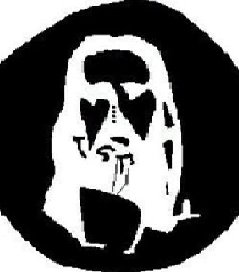
Are the fish changing into birds or is it the other way around? The point is that it could be interpreted either way round depending on how you perceive it. This is due to the fact that peoples perception on the same thing varies. In the same way, one person could look at the image and portray it in a certain way and then come back later and see something completely different.

Perception is seen as a three step process to produce a meaning:

  • selecting
  • organising
  • interpreting

Friday, 17 October 2008

Who Are You??


Do your personal possessions make you who your are? Or do they make you feel like the person you want to be?


We are what we have. "It’s a simple concept, and a basic premise of consumer behaviour. But, it has boggled the minds of the best psychologists, sociologists, consumer behaviorists, advertisers and marketers for half a century at the least. For, as it turns out now, this simple concept is really a combination of two others. Not only are we what we are seen to be (the ‘me’ concept), we are also what is seen to be ours (the ‘mine’ concept). It seems we, as human beings, create our identities using both these – the ‘me’ and the ‘mine’ – concepts."

Possessions are often what makes a person, by this I mean the clothes we wear and the cars we drive, not only this but our experiences and memories and also the people we have in our lives play a part in making us who we are.

People's perception of others are often taken on first impressions. In the lecture we were given a minor case study in which we looked at a young lady called Maria, she stood in silence whilst Ruth asked us questions on what we thought of her based on first impressions.


  • Where was she from?
  • What we thought of her dress sense? (If she liked expensive things.)
  • What she did for a job?
  • What car she drives?
  • What newspaper she reads?

These were just a few questions that were asked to see how she was perceived by everyone in class. Surprisingly most of these we presumed correctly. But Why? How is it that just by studying a persons appearance and body language we can assume correctly so much about them?